Job Details
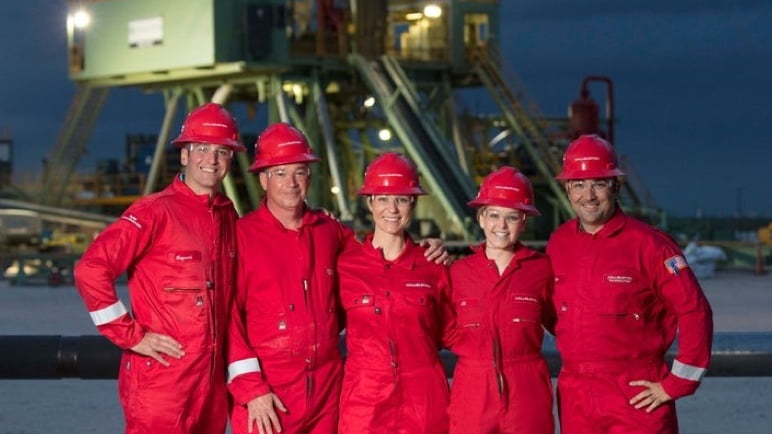
Recognized in Red
Geophysicist, Seismic Inversion (Senior - Principal - Advisor) Landmark - 211399
Houston, Texas, United StatesJob Description
We are looking for the right people — people who want to innovate, achieve, grow and lead. We attract and retain the best talent by investing in our employees and empowering them to develop themselves and their careers. Experience the challenges, rewards and opportunity of working for one of the world’s largest providers of products and services to the global energy industry.
About Landmark
Landmark, a Halliburton business line, provides the industry’s most comprehensive suite of digital solutions for exploration, drilling, and production optimization. Its software and data platforms empower customers to model subsurface assets, manage drilling risk, and accelerate decision-making through cloud, AI, and advanced analytics.
About the Role
We are seeking an R&D geophysicist to develop advanced seismic imaging, inversion, and quantitative-interpretation technologies for reservoir characterization. The role will apply Python, machine learning, deep learning, and mathematical inversion methods to integrate seismic data with well logs, rock physics, petrophysics, sequence stratigraphy, and seismic facies information.
You will develop and validate workflows that transform seismic observations into high-resolution 3D estimates of reservoir properties such as porosity, shale volume, and fluid saturation, including associated uncertainty. Working with geoscientists, reservoir engineers, data scientists, software developers, product stakeholders, and technical customers, you will convert research concepts into tested prototypes and product-ready technical capabilities.
Key Responsibilities
- Develop elastic full-waveform inversion and acoustic or elastic seismic-inversion methods for shot-gather, post-stack, and pre-stack AVO/AVA applications.
- Design AI and deep-learning approaches that improve seismic imaging, inversion, seismic facies classification, and seismic-to-petrophysical property mapping.
- Integrate seismic volumes, well logs, core measurements, rock-physics relationships, and geologic interpretations to construct high-resolution 3D reservoir-property models.
- Develop Python-based research prototypes, algorithms, and reproducible technical workflows using appropriate scientific-computing and machine-learning frameworks.
- Quantify uncertainty in predicted rock properties and fluid saturations using statistical, probabilistic, ensemble, or AI-enabled inverse-problem methods.
- Distinguish and evaluate epistemic and aleatoric uncertainty, analyze model generalization, and identify limitations in training data and model assumptions.
- Validate seismic, reservoir, and machine-learning models using blind-well tests, held-out data, physical consistency checks, and comparison with known subsurface observations.
- Incorporate sequence-stratigraphic frameworks, seismic facies, geostatistical principles, and petrophysical constraints into reservoir-characterization workflows.
- Collaborate with multidisciplinary R&D and product teams to define technical problems, prioritize experiments, assess feasibility, and translate successful research into usable software capabilities.
- Document methods, assumptions, experiments, results, model limitations, and recommendations, and communicate complex findings to technical and product stakeholders.
- Monitor advances in geophysics, AI, deep learning, and scientific computing, and contribute to technical publications, presentations, invention disclosures, and patents where appropriate.
Qualifications
Required
- Undergraduate degree in Science, Engineering, or a similar technical discipline.
- Minimum of four years of related experience in applied research, technology development, product development, engineering, scientific analysis, or a comparable technical field.
- Demonstrated experience applying scientific or engineering principles to seismic imaging, seismic inversion, quantitative interpretation, reservoir characterization, or a closely related technical problem.
- Proficiency in Python and experience developing scientific-computing, data-analysis, machine-learning, or deep-learning workflows.
- Experience designing technical investigations, experiments, model evaluations, or validation studies and interpreting the resulting data.
- Ability to document technical work, manage defined R&D deliverables, and communicate complex concepts and recommendations to multidisciplinary technical stakeholders.
Preferred
- Master’s degree or PhD in Geophysics, Rock Physics, Petroleum Engineering, Applied Mathematics, Computer Science, or a related technical discipline.
- Experience with full-waveform inversion, pre-stack AVO/AVA inversion, post-stack inversion, quantitative interpretation, rock physics, or seismic reservoir characterization.
- Experience with PyTorch, TensorFlow, scikit-learn, or comparable AI and scientific-computing technologies.
- Experience with uncertainty quantification, probabilistic inversion, geostatistics, sequence stratigraphy, seismic facies classification, or 3D static reservoir modeling.
- Energy-industry R&D experience, cloud or high-performance computing exposure, and a record of technical publications, presentations, patents, or research-to-product delivery.
Candidates who possess qualifications exceeding the minimum job requirements may be considered for higher-level positions based on experience, additional qualifications, demonstrated capabilities, and current business needs. Depending on education, experience, and skill level, candidates may be eligible for roles ranging from Senior R&D Scientist/Engineer, Landmark Technology to Principal R&D Scientist/Engineer, Landmark Technology or Advisor R&D Scientist/Engineer, Landmark Technology.
World Class Benefits
At Halliburton, we’re committed to supporting you and your family with a comprehensive and affordable benefits package that covers your physical, emotional, financial, and parental needs — now and in the future. When you join our team, you’ll gain access to a wide range of programs designed to help you thrive at work and at home.
Click here to review a summary of the benefits available once you join.
Core Competencies
Seismic Inversion | Full-Waveform Inversion | Elastic FWI | Quantitative Interpretation | AVO/AVA | Rock Physics | Petrophysics | Reservoir Characterization | Subsurface Machine Learning | Deep Learning | Python | PyTorch | TensorFlow | Uncertainty Quantification | Seismic Facies Classification | Sequence Stratigraphy | Geostatistics | 3D Reservoir Modeling
Halliburton is an Equal Opportunity Employer. Employment decisions are made without regard to race, color, religion, disability, genetic information, pregnancy, citizenship, marital status, sex/gender, sexual preference/ orientation, gender identity, age, veteran status, national origin, or any other status protected by law or regulation.
Location
3000 N Sam Houston Pkwy E, Houston, Texas, 77032, United States
Job Details
Requisition Number: 211399
Experience Level: Experienced Hire
Job Family: Engineering/Science/Technology
Product Service Line: Landmark Software & Services
Full Time / Part Time: Full-time
Additional Locations for this position:
Compensation Information
Compensation is competitive and commensurate with experience.
Recruitment Fraud Notice
Be aware of fraudulent recruitment scams. Click here to review Halliburton’s notice of recruitment scams.
We are looking for the right people — people who want to innovate, achieve, grow and lead. We attract and retain the best talent by investing in our employees and empowering them to develop themselves and their careers. Experience the challenges, rewards and opportunity of working for one of the world’s largest providers of products and services to the global energy industry.
About Landmark
Landmark, a Halliburton business line, provides the industry’s most comprehensive suite of digital solutions for exploration, drilling, and production optimization. Its software and data platforms empower customers to model subsurface assets, manage drilling risk, and accelerate decision-making through cloud, AI, and advanced analytics.
About the Role
We are seeking an R&D geophysicist to develop advanced seismic imaging, inversion, and quantitative-interpretation technologies for reservoir characterization. The role will apply Python, machine learning, deep learning, and mathematical inversion methods to integrate seismic data with well logs, rock physics, petrophysics, sequence stratigraphy, and seismic facies information.
You will develop and validate workflows that transform seismic observations into high-resolution 3D estimates of reservoir properties such as porosity, shale volume, and fluid saturation, including associated uncertainty. Working with geoscientists, reservoir engineers, data scientists, software developers, product stakeholders, and technical customers, you will convert research concepts into tested prototypes and product-ready technical capabilities.
Key Responsibilities
- Develop elastic full-waveform inversion and acoustic or elastic seismic-inversion methods for shot-gather, post-stack, and pre-stack AVO/AVA applications.
- Design AI and deep-learning approaches that improve seismic imaging, inversion, seismic facies classification, and seismic-to-petrophysical property mapping.
- Integrate seismic volumes, well logs, core measurements, rock-physics relationships, and geologic interpretations to construct high-resolution 3D reservoir-property models.
- Develop Python-based research prototypes, algorithms, and reproducible technical workflows using appropriate scientific-computing and machine-learning frameworks.
- Quantify uncertainty in predicted rock properties and fluid saturations using statistical, probabilistic, ensemble, or AI-enabled inverse-problem methods.
- Distinguish and evaluate epistemic and aleatoric uncertainty, analyze model generalization, and identify limitations in training data and model assumptions.
- Validate seismic, reservoir, and machine-learning models using blind-well tests, held-out data, physical consistency checks, and comparison with known subsurface observations.
- Incorporate sequence-stratigraphic frameworks, seismic facies, geostatistical principles, and petrophysical constraints into reservoir-characterization workflows.
- Collaborate with multidisciplinary R&D and product teams to define technical problems, prioritize experiments, assess feasibility, and translate successful research into usable software capabilities.
- Document methods, assumptions, experiments, results, model limitations, and recommendations, and communicate complex findings to technical and product stakeholders.
- Monitor advances in geophysics, AI, deep learning, and scientific computing, and contribute to technical publications, presentations, invention disclosures, and patents where appropriate.
Qualifications
Required
- Undergraduate degree in Science, Engineering, or a similar technical discipline.
- Minimum of four years of related experience in applied research, technology development, product development, engineering, scientific analysis, or a comparable technical field.
- Demonstrated experience applying scientific or engineering principles to seismic imaging, seismic inversion, quantitative interpretation, reservoir characterization, or a closely related technical problem.
- Proficiency in Python and experience developing scientific-computing, data-analysis, machine-learning, or deep-learning workflows.
- Experience designing technical investigations, experiments, model evaluations, or validation studies and interpreting the resulting data.
- Ability to document technical work, manage defined R&D deliverables, and communicate complex concepts and recommendations to multidisciplinary technical stakeholders.
Preferred
- Master’s degree or PhD in Geophysics, Rock Physics, Petroleum Engineering, Applied Mathematics, Computer Science, or a related technical discipline.
- Experience with full-waveform inversion, pre-stack AVO/AVA inversion, post-stack inversion, quantitative interpretation, rock physics, or seismic reservoir characterization.
- Experience with PyTorch, TensorFlow, scikit-learn, or comparable AI and scientific-computing technologies.
- Experience with uncertainty quantification, probabilistic inversion, geostatistics, sequence stratigraphy, seismic facies classification, or 3D static reservoir modeling.
- Energy-industry R&D experience, cloud or high-performance computing exposure, and a record of technical publications, presentations, patents, or research-to-product delivery.
Candidates who possess qualifications exceeding the minimum job requirements may be considered for higher-level positions based on experience, additional qualifications, demonstrated capabilities, and current business needs. Depending on education, experience, and skill level, candidates may be eligible for roles ranging from Senior R&D Scientist/Engineer, Landmark Technology to Principal R&D Scientist/Engineer, Landmark Technology or Advisor R&D Scientist/Engineer, Landmark Technology.
World Class Benefits
At Halliburton, we’re committed to supporting you and your family with a comprehensive and affordable benefits package that covers your physical, emotional, financial, and parental needs — now and in the future. When you join our team, you’ll gain access to a wide range of programs designed to help you thrive at work and at home.
Click here to review a summary of the benefits available once you join.
Core Competencies
Seismic Inversion | Full-Waveform Inversion | Elastic FWI | Quantitative Interpretation | AVO/AVA | Rock Physics | Petrophysics | Reservoir Characterization | Subsurface Machine Learning | Deep Learning | Python | PyTorch | TensorFlow | Uncertainty Quantification | Seismic Facies Classification | Sequence Stratigraphy | Geostatistics | 3D Reservoir Modeling
Halliburton is an Equal Opportunity Employer. Employment decisions are made without regard to race, color, religion, disability, genetic information, pregnancy, citizenship, marital status, sex/gender, sexual preference/ orientation, gender identity, age, veteran status, national origin, or any other status protected by law or regulation.
Location
3000 N Sam Houston Pkwy E, Houston, Texas, 77032, United States
Job Details
Requisition Number: 211399
Experience Level: Experienced Hire
Job Family: Engineering/Science/Technology
Product Service Line: Landmark Software & Services
Full Time / Part Time: Full-time
Additional Locations for this position:
Compensation Information
Compensation is competitive and commensurate with experience.
We are looking for the right people — people who want to innovate, achieve, grow and lead. We attract and retain the best talent by investing in our employees and empowering them to develop themselves and their careers. Experience the challenges, rewards and opportunity of working for one of the world’s largest providers of products and services to the global energy industry.
About Landmark
Landmark, a Halliburton business line, provides the industry’s most comprehensive suite of digital solutions for exploration, drilling, and production optimization. Its software and data platforms empower customers to model subsurface assets, manage drilling risk, and accelerate decision-making through cloud, AI, and advanced analytics.
About the Role
We are seeking an R&D geophysicist to develop advanced seismic imaging, inversion, and quantitative-interpretation technologies for reservoir characterization. The role will apply Python, machine learning, deep learning, and mathematical inversion methods to integrate seismic data with well logs, rock physics, petrophysics, sequence stratigraphy, and seismic facies information.
You will develop and validate workflows that transform seismic observations into high-resolution 3D estimates of reservoir properties such as porosity, shale volume, and fluid saturation, including associated uncertainty. Working with geoscientists, reservoir engineers, data scientists, software developers, product stakeholders, and technical customers, you will convert research concepts into tested prototypes and product-ready technical capabilities.
Key Responsibilities
- Develop elastic full-waveform inversion and acoustic or elastic seismic-inversion methods for shot-gather, post-stack, and pre-stack AVO/AVA applications.
- Design AI and deep-learning approaches that improve seismic imaging, inversion, seismic facies classification, and seismic-to-petrophysical property mapping.
- Integrate seismic volumes, well logs, core measurements, rock-physics relationships, and geologic interpretations to construct high-resolution 3D reservoir-property models.
- Develop Python-based research prototypes, algorithms, and reproducible technical workflows using appropriate scientific-computing and machine-learning frameworks.
- Quantify uncertainty in predicted rock properties and fluid saturations using statistical, probabilistic, ensemble, or AI-enabled inverse-problem methods.
- Distinguish and evaluate epistemic and aleatoric uncertainty, analyze model generalization, and identify limitations in training data and model assumptions.
- Validate seismic, reservoir, and machine-learning models using blind-well tests, held-out data, physical consistency checks, and comparison with known subsurface observations.
- Incorporate sequence-stratigraphic frameworks, seismic facies, geostatistical principles, and petrophysical constraints into reservoir-characterization workflows.
- Collaborate with multidisciplinary R&D and product teams to define technical problems, prioritize experiments, assess feasibility, and translate successful research into usable software capabilities.
- Document methods, assumptions, experiments, results, model limitations, and recommendations, and communicate complex findings to technical and product stakeholders.
- Monitor advances in geophysics, AI, deep learning, and scientific computing, and contribute to technical publications, presentations, invention disclosures, and patents where appropriate.
Qualifications
Required
- Undergraduate degree in Science, Engineering, or a similar technical discipline.
- Minimum of four years of related experience in applied research, technology development, product development, engineering, scientific analysis, or a comparable technical field.
- Demonstrated experience applying scientific or engineering principles to seismic imaging, seismic inversion, quantitative interpretation, reservoir characterization, or a closely related technical problem.
- Proficiency in Python and experience developing scientific-computing, data-analysis, machine-learning, or deep-learning workflows.
- Experience designing technical investigations, experiments, model evaluations, or validation studies and interpreting the resulting data.
- Ability to document technical work, manage defined R&D deliverables, and communicate complex concepts and recommendations to multidisciplinary technical stakeholders.
Preferred
- Master’s degree or PhD in Geophysics, Rock Physics, Petroleum Engineering, Applied Mathematics, Computer Science, or a related technical discipline.
- Experience with full-waveform inversion, pre-stack AVO/AVA inversion, post-stack inversion, quantitative interpretation, rock physics, or seismic reservoir characterization.
- Experience with PyTorch, TensorFlow, scikit-learn, or comparable AI and scientific-computing technologies.
- Experience with uncertainty quantification, probabilistic inversion, geostatistics, sequence stratigraphy, seismic facies classification, or 3D static reservoir modeling.
- Energy-industry R&D experience, cloud or high-performance computing exposure, and a record of technical publications, presentations, patents, or research-to-product delivery.
Candidates who possess qualifications exceeding the minimum job requirements may be considered for higher-level positions based on experience, additional qualifications, demonstrated capabilities, and current business needs. Depending on education, experience, and skill level, candidates may be eligible for roles ranging from Senior R&D Scientist/Engineer, Landmark Technology to Principal R&D Scientist/Engineer, Landmark Technology or Advisor R&D Scientist/Engineer, Landmark Technology.
World Class Benefits
At Halliburton, we’re committed to supporting you and your family with a comprehensive and affordable benefits package that covers your physical, emotional, financial, and parental needs — now and in the future. When you join our team, you’ll gain access to a wide range of programs designed to help you thrive at work and at home.
Click here to review a summary of the benefits available once you join.
Core Competencies
Seismic Inversion | Full-Waveform Inversion | Elastic FWI | Quantitative Interpretation | AVO/AVA | Rock Physics | Petrophysics | Reservoir Characterization | Subsurface Machine Learning | Deep Learning | Python | PyTorch | TensorFlow | Uncertainty Quantification | Seismic Facies Classification | Sequence Stratigraphy | Geostatistics | 3D Reservoir Modeling
Halliburton is an Equal Opportunity Employer. Employment decisions are made without regard to race, color, religion, disability, genetic information, pregnancy, citizenship, marital status, sex/gender, sexual preference/ orientation, gender identity, age, veteran status, national origin, or any other status protected by law or regulation.
Location
3000 N Sam Houston Pkwy E, Houston, Texas, 77032, United States
Job Details
Requisition Number: 211399
Experience Level: Experienced Hire
Job Family: Engineering/Science/Technology
Product Service Line: Landmark Software & Services
Full Time / Part Time: Full-time
Additional Locations for this position:
Compensation Information
Compensation is competitive and commensurate with experience.
We are looking for the right people — people who want to innovate, achieve, grow and lead. We attract and retain the best talent by investing in our employees and empowering them to develop themselves and their careers. Experience the challenges, rewards and opportunity of working for one of the world’s largest providers of products and services to the global energy industry.
About Landmark
Landmark, a Halliburton business line, provides the industry’s most comprehensive suite of digital solutions for exploration, drilling, and production optimization. Its software and data platforms empower customers to model subsurface assets, manage drilling risk, and accelerate decision-making through cloud, AI, and advanced analytics.
About the Role
We are seeking an R&D geophysicist to develop advanced seismic imaging, inversion, and quantitative-interpretation technologies for reservoir characterization. The role will apply Python, machine learning, deep learning, and mathematical inversion methods to integrate seismic data with well logs, rock physics, petrophysics, sequence stratigraphy, and seismic facies information.
You will develop and validate workflows that transform seismic observations into high-resolution 3D estimates of reservoir properties such as porosity, shale volume, and fluid saturation, including associated uncertainty. Working with geoscientists, reservoir engineers, data scientists, software developers, product stakeholders, and technical customers, you will convert research concepts into tested prototypes and product-ready technical capabilities.
Key Responsibilities
- Develop elastic full-waveform inversion and acoustic or elastic seismic-inversion methods for shot-gather, post-stack, and pre-stack AVO/AVA applications.
- Design AI and deep-learning approaches that improve seismic imaging, inversion, seismic facies classification, and seismic-to-petrophysical property mapping.
- Integrate seismic volumes, well logs, core measurements, rock-physics relationships, and geologic interpretations to construct high-resolution 3D reservoir-property models.
- Develop Python-based research prototypes, algorithms, and reproducible technical workflows using appropriate scientific-computing and machine-learning frameworks.
- Quantify uncertainty in predicted rock properties and fluid saturations using statistical, probabilistic, ensemble, or AI-enabled inverse-problem methods.
- Distinguish and evaluate epistemic and aleatoric uncertainty, analyze model generalization, and identify limitations in training data and model assumptions.
- Validate seismic, reservoir, and machine-learning models using blind-well tests, held-out data, physical consistency checks, and comparison with known subsurface observations.
- Incorporate sequence-stratigraphic frameworks, seismic facies, geostatistical principles, and petrophysical constraints into reservoir-characterization workflows.
- Collaborate with multidisciplinary R&D and product teams to define technical problems, prioritize experiments, assess feasibility, and translate successful research into usable software capabilities.
- Document methods, assumptions, experiments, results, model limitations, and recommendations, and communicate complex findings to technical and product stakeholders.
- Monitor advances in geophysics, AI, deep learning, and scientific computing, and contribute to technical publications, presentations, invention disclosures, and patents where appropriate.
Qualifications
Required
- Undergraduate degree in Science, Engineering, or a similar technical discipline.
- Minimum of four years of related experience in applied research, technology development, product development, engineering, scientific analysis, or a comparable technical field.
- Demonstrated experience applying scientific or engineering principles to seismic imaging, seismic inversion, quantitative interpretation, reservoir characterization, or a closely related technical problem.
- Proficiency in Python and experience developing scientific-computing, data-analysis, machine-learning, or deep-learning workflows.
- Experience designing technical investigations, experiments, model evaluations, or validation studies and interpreting the resulting data.
- Ability to document technical work, manage defined R&D deliverables, and communicate complex concepts and recommendations to multidisciplinary technical stakeholders.
Preferred
- Master’s degree or PhD in Geophysics, Rock Physics, Petroleum Engineering, Applied Mathematics, Computer Science, or a related technical discipline.
- Experience with full-waveform inversion, pre-stack AVO/AVA inversion, post-stack inversion, quantitative interpretation, rock physics, or seismic reservoir characterization.
- Experience with PyTorch, TensorFlow, scikit-learn, or comparable AI and scientific-computing technologies.
- Experience with uncertainty quantification, probabilistic inversion, geostatistics, sequence stratigraphy, seismic facies classification, or 3D static reservoir modeling.
- Energy-industry R&D experience, cloud or high-performance computing exposure, and a record of technical publications, presentations, patents, or research-to-product delivery.
Candidates who possess qualifications exceeding the minimum job requirements may be considered for higher-level positions based on experience, additional qualifications, demonstrated capabilities, and current business needs. Depending on education, experience, and skill level, candidates may be eligible for roles ranging from Senior R&D Scientist/Engineer, Landmark Technology to Principal R&D Scientist/Engineer, Landmark Technology or Advisor R&D Scientist/Engineer, Landmark Technology.
World Class Benefits
At Halliburton, we’re committed to supporting you and your family with a comprehensive and affordable benefits package that covers your physical, emotional, financial, and parental needs — now and in the future. When you join our team, you’ll gain access to a wide range of programs designed to help you thrive at work and at home.
Click here to review a summary of the benefits available once you join.
Core Competencies
Seismic Inversion | Full-Waveform Inversion | Elastic FWI | Quantitative Interpretation | AVO/AVA | Rock Physics | Petrophysics | Reservoir Characterization | Subsurface Machine Learning | Deep Learning | Python | PyTorch | TensorFlow | Uncertainty Quantification | Seismic Facies Classification | Sequence Stratigraphy | Geostatistics | 3D Reservoir Modeling
Halliburton is an Equal Opportunity Employer. Employment decisions are made without regard to race, color, religion, disability, genetic information, pregnancy, citizenship, marital status, sex/gender, sexual preference/ orientation, gender identity, age, veteran status, national origin, or any other status protected by law or regulation.
Location
3000 N Sam Houston Pkwy E, Houston, Texas, 77032, United States
Job Details
Requisition Number: 211399
Experience Level: Experienced Hire
Job Family: Engineering/Science/Technology
Product Service Line: Landmark Software & Services
Full Time / Part Time: Full-time
Additional Locations for this position:
Compensation Information
Compensation is competitive and commensurate with experience.